
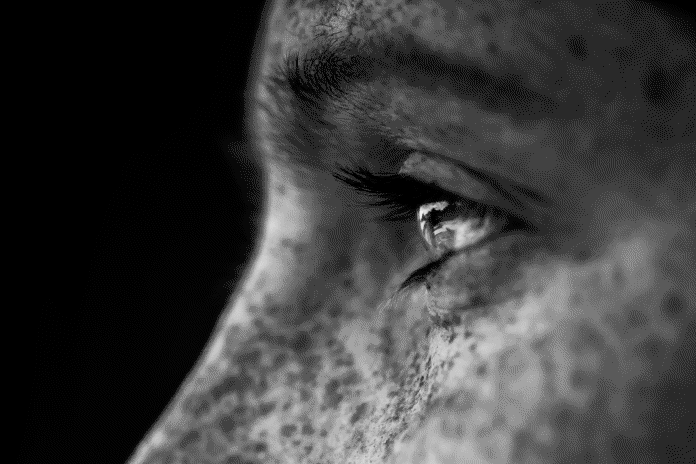
“Admit something:
Everyone you see, you say to them,
“Love me.”
Of course you do not do this out loud;
otherwise, someone would call the cops.
Still though, think about this,
this great pull in us
to connect.
Why not become the one
who lives with a full moon in each eye
that is always saying,
with that sweet moon language,
what every other eye in this world
is dying to hear?”
With That Moon Language, by Hafiz (translated by Daniel Ladinsky)
Seeking the gaze
Sometimes I think it would be easier if we all just walked around wearing t-shirts printed with “Please Love Me”.
Because when it comes down to it, in essence all we humble humans are looking for is to feel safe and secure, to feel loved and to love.
These core desires fuel pretty much everything we do in life – our family, our friends, our work, our romantic relationships.
We go out into the world seeking acknowledgement (am I really here?), seeking a place here (do I belong?), seeking attunement and response to our desires (can I affect this world?), and seeking a kind of recognition (do I have significance in this world?).
We exist in this world seeking safety and love. This core sense of love and safety in the world can be wrapped up in a gaze.
Is the world a safe and friendly place?
As tiny babies, our understanding of the world – whether the world is a safe and a “good” place, or whether it is an inconsistent and frightening place, relies almost completely on our relationships with our caregivers.
This early programming within baby’s developing brain (week 6 to month 6) contributes to form our understanding of our relationship to others, and our relationship to the world. Because at that early age, mum and dad, our caregivers, are the entirety/sum total of our world – the world – and of our experience of love, and the model formed at that time, sets the score for our understanding of the world and of love. And of how we being to relate to both.
If our caregivers are attuned and responsive to our needs, we learn that we are seen and heard, that we have agency within the world, that we are safe here, and essentially that we are loved here, that we belong.
The mutual gaze
One of the ways in which attachment is established and attunement is demonstrated to baby is in the mutual gaze – the mirroring of eye gazing between caregiver (often mother) and baby.
Babies will begin to stare into the eyes of a caregiver between 6-10 weeks.
If mother mirrors back to baby, and keeps the gaze until baby looks away, baby will feel seen, acknowledged, safe and secure. Baby will feel fulfilled of the gaze.
If mother ceases gaze quicker than baby, baby may feel a connection broken too soon. And may long for more.
If mother doesn’t see or return baby’s gaze at all, baby may feel unmirrored, unacknowledged, unrecognised, and may avoid the pain of that experience by giving up or avoiding the gaze. If baby does not become accustomed to receiving the gaze back, baby may become uncomfortable under a gaze.
Our core concepts of love and relating
John Bowlby’s Attachment Theory suggests that early programming sets the path for our attachment style which guides us through life and our relationships. It can determine whether we have an ability to securely attach to another, whether we are insecure in attaching to/loving another, or whether we avoid or resist attachment altogether.
Seeking the gaze
We may go out into the world seeking a gaze from another to feel connection, and belonging, continually seeking that reassurance, that validation, that safety and that love in the world.
If we are lucky, when we meet that gaze, we recognise it, and move closer to it. If we are not, we may never be able to recognise it, and end up forever chasing what does not exist, and missing what is right in front of us.
And sometimes in our quest, it can be that we recognise it, but it may feel so unfamiliar and uncomfortable that we may not be able to tolerate it, and we disconnect and hide away.
“You can’t love anybody else until you learn to love yourself”…But what the fuck does that actually mean?
I don’t have the answer. The answer is not here.
But what I have learned is that until we can learn to stop seeking, until we learn to develop that secure attachment to the self – to stop, listen and recognise ourselves, to become attuned and responsive to ourselves, to look ourselves in the mirror and return the gaze back to ourselves, we will have difficulty being truly intimately loving with an “other”.
Because to love, is to be present in everything that we are – even the parts of ourselves that we really don’t like – not hiding parts of ourselves in shame, or making others responsible for validating us. It is to freely offer love to the other, while at the same time fully being our whole selves. And so, we can’t fully love anybody else, until we learn to accept and love ourselves.
Again, I do not have the answers, but I do know that I am not the only one with these questions. I hope some of these musings might shed a little light on the path along the way for others wandering their own journey.